
Exploring Saliva as a Minimally Invasive DNA Source: Key Advantages in Collection Methodology and Participant Compliance
November 10, 2025
Recent advances in genetic testing have positioned saliva as a superior alternative to blood for DNA collection due to its non-invasive nature, simplified logistics, and enhanced participant compliance. While blood remains a traditional source, saliva collection eliminates medical risks, reduces infrastructure demands, and enables scalable genetic research and clinical testing. The evidence demonstrates that saliva’s advantages stem from four core factors: elimination of invasive procedures, self-administered collection protocols, improved participant willingness, and simplified transport/storage requirements.
Elimination of Invasive Medical Procedures
Saliva collection entirely avoids the physical and psychological burdens associated with venipuncture, which requires trained phlebotomists, sterile needles, and clinical settings. Blood draws carry risks of bruising, hematoma formation, and rare but serious complications like nerve damage or infection from improper needle use. In contrast, saliva collection involves no needles, making it safer for individuals with bleeding disorders, needle phobia, or fragile veins. This safety profile is particularly critical for pediatric populations, elderly patients, and those requiring repeated sampling over time.
The non-invasive nature of saliva collection also reduces legal and ethical barriers to genetic testing. Blood collection typically requires informed consent detailing medical risks, whereas saliva kits can be distributed with simplified instructions, enabling broader participation in population studies and direct to-consumer testing. Furthermore, the absence of biohazardous materials (e.g., needles, blood tubes) eliminates the need for specialized waste disposal systems, reducing institutional costs and regulatory burdens.
Self-Administered Collection Protocols
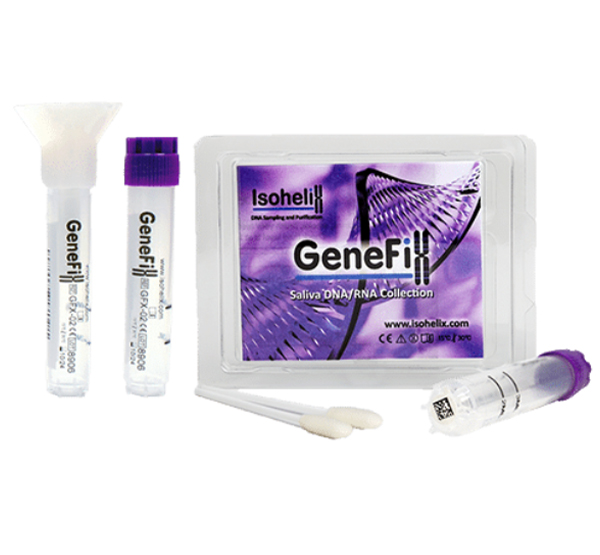
Saliva collection empowers participants through at-home or point-of-care sampling, requiring only basic instructions rather than medical expertise. Modern kits provide all-in-one devices where users simply spit into a stabilized container or use absorbent sponges, with no need for timing measurements or complex techniques. This contrasts sharply with blood collection, which demands precise venipuncture skills to avoid hemolysis or insufficient sample volumes. The simplicity of saliva protocols enhances accessibility across diverse populations.
Enhanced Participant Compliance and Comfort
Psychological barriers significantly impact participation rates in genetic studies. Up to 15% of adults experience needle phobia, while pediatric patients often exhibit distress during blood draws, leading to refusal rates exceeding 50% in some cohorts. Saliva collection eliminates these barriers, with studies showing 2–3× higher compliance rates compared to blood-based protocols. This increased willingness enables researchers to recruit more representative study populations, including individuals from marginalized communities who may distrust clinical settings.
The comfort of saliva collection also improves data quality by reducing stress-induced biomarker fluctuations. Blood draws can elevate cortisol levels and alter immune markers, potentially confounding study results. Saliva sampling avoids these physiological artifacts, providing a more accurate baseline for genetic and biomarker analyses. Furthermore, the ability to collect samples at home minimizes disruptions to work or school schedules, making participation feasible for time-constrained individuals.
Simplified Transport and Storage Logistics
Saliva’s room-temperature stability revolutionizes sample management compared to blood, which typically requires refrigerated transport and immediate processing.
The logistical advantages extend to long-term storage costs. Blood-derived DNA often requires −80°C freezers, consuming significant energy and lab space. One of the benefits of a high-quality collector and stabilization buffer to allow room temperature storage is the elimination for costly cooling and the real estate that refrigerators require. These features make saliva ideal for biobanking initiatives and multi center collaborations where consistent storage conditions are challenging to maintain. For clinical diagnostics, saliva’s stability allows clinics to batch process samples weekly rather than daily, optimizing laboratory workflows.
Conclusion
Saliva collection represents a paradigm shift in genetic testing by addressing the core limitations of blood based methods. Its non-invasive nature eliminates medical risks and expands access to underserved populations, while self-administered protocols empower participants and reduce healthcare system burdens.
Ask us about very cost-effective saliva collection devices. Talk to AutoGen. We’re always
happy to help you make the best decisions for your project needs.